
Postpartum Help for Twins: What Parents Need Most
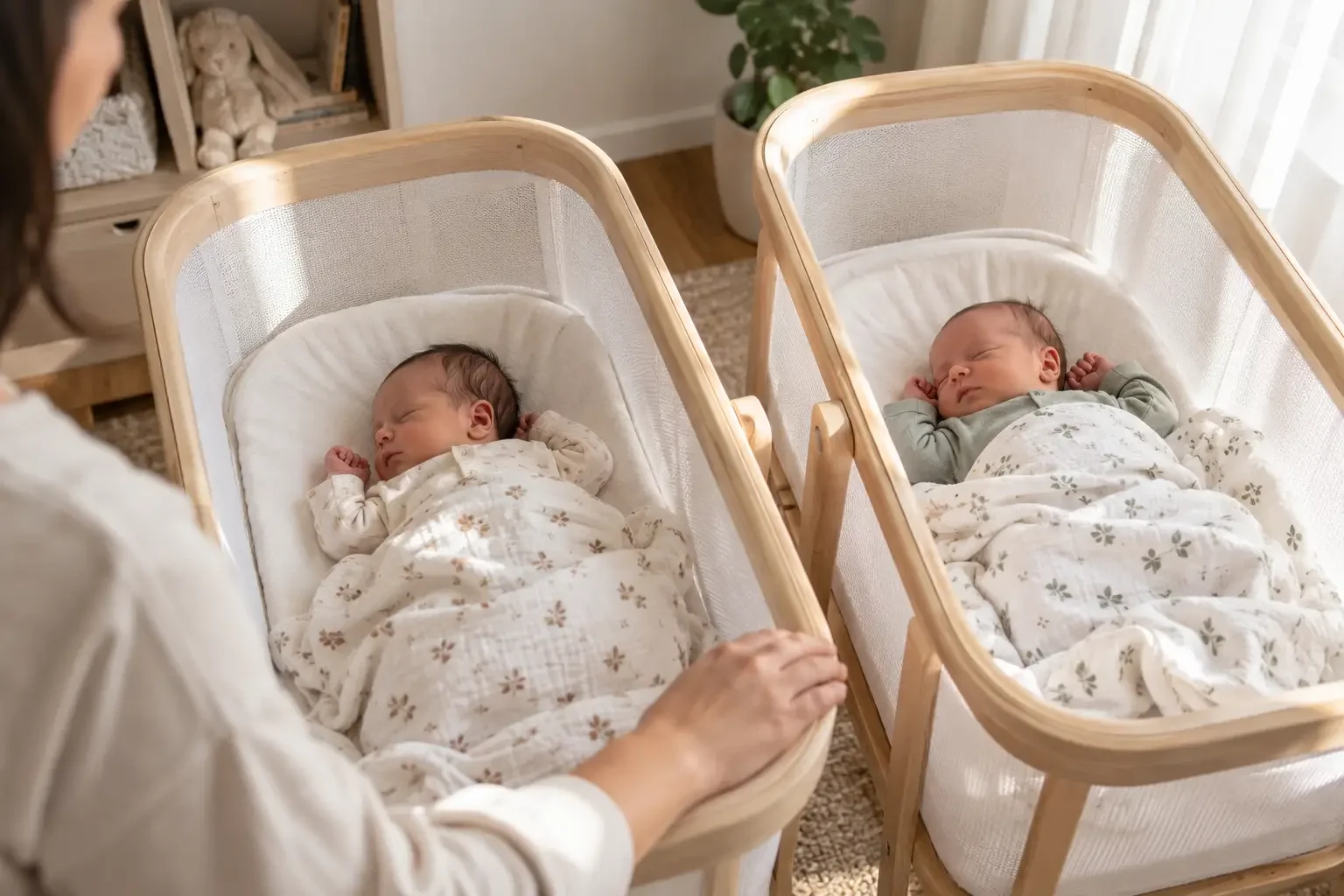
Bringing twins home sounds like double the joy, and it is. It is also double the feedings, double the diapers, and, for many parents, far more than double the exhaustion. Twin births remain relatively uncommon in the United States, with 109,195 twin births in 2024, a rate of about 30 per 1,000 live births, according to the CDC. Because few families have lived through it, most parents of twins arrive at the first night home with plenty of love and very little preparation.
This guide moves from the big picture to the practical details. First, we explain why twins change the postpartum math. Then we cover the kinds of help that matter most, from overnight care to emotional support. Finally, we share simple routines that make the first months more manageable.
Quick answer: The most useful postpartum help for twins is overnight newborn care, so both parents can sleep in long stretches, combined with daytime support for feeding, meals, and recovery. Twins need two feeding plans, two sleep spaces, and twice the laundry, so a second pair of trained hands changes everything.
Why Twins Change the Postpartum Math
With one baby, a parent can nap when the baby naps. With twins, the babies rarely nap on the same schedule, and one often wakes just as the other falls asleep. As a result, the parent who tries to cover both babies alone may never get a full sleep cycle.
Feeding multiplies the pressure. Newborns eat often, so two newborns can mean near-constant feeding in the first weeks. If you breastfeed, you may also pump and prepare bottles between sessions. If you bottle feed, you still wash, mix, and warm bottles around the clock. Meanwhile, a cesarean birth, which is more common with twins, adds physical recovery on top of the workload.
Twins also arrive early more often than single babies, so some families face a NICU stay before the babies ever come home. That experience adds worry and travel back and forth, and it can drain a family before the "real" postpartum period begins. If your babies arrive early, ask your care team what to expect, and ask your caregiver whether she has experience with preemies.
The Emotional Side of Parenting Twins
The physical load gets most of the attention, but the emotional load matters just as much. A 2018 survey of 244 parents of twins and other multiples, reported by NPR, found that 48 percent struggled emotionally after their babies arrived, and anxiety and stress ranked among the most pressing challenges. Yet fewer than 10 percent of those parents got professional help. Another study, from 2009, found that mothers of multiples were 43 percent more likely to have postpartum depression than mothers of single babies.
These numbers do not mean something is wrong with you. Rather, they show that twins create real pressure, and that parents benefit from support. If you feel persistently sad, anxious, or unable to enjoy your babies, please tell your healthcare provider. In the United States, you can also call or text the National Maternal Mental Health Hotline at 1-833-TLC-MAMA (1-833-852-6262), or call or text 988 in a crisis. A doula supports you, but she does not replace medical care.

The Kinds of Help That Matter Most
Not every kind of help pulls the same weight. Think about where your family feels the most strain, then match the help to the gap.
Overnight newborn care comes first for most families. A night nanny or newborn care specialist takes the baby shift, so you can sleep in a long block. With twins, she can feed one baby while you wake for the other, or she can handle both feeds if you do not nurse. She also keeps a written log of each baby's feeds, diapers, and sleep, which saves you from guessing at 3 a.m. which twin ate last.
Daytime doula support comes next. A postpartum doula helps you recover, prepares simple meals, supports feeding, and teaches you routines that work for two babies. She also notices how you are coping, and she can nudge you to rest or to call your doctor when something feels off.
Household help rounds out the picture. Laundry, dishes, bottle washing, and restocking supplies sound small, yet they eat hours. When someone else handles them, you can spend your energy on your babies and on yourself.
Finally, sibling support matters if you already have an older child. A toddler watching two new babies take over the house needs extra attention, so a caregiver who can spend time with the older child helps the whole family. Our guide to what a sibling doula does explains how this works.
What a Night With Twins Can Look Like With Help
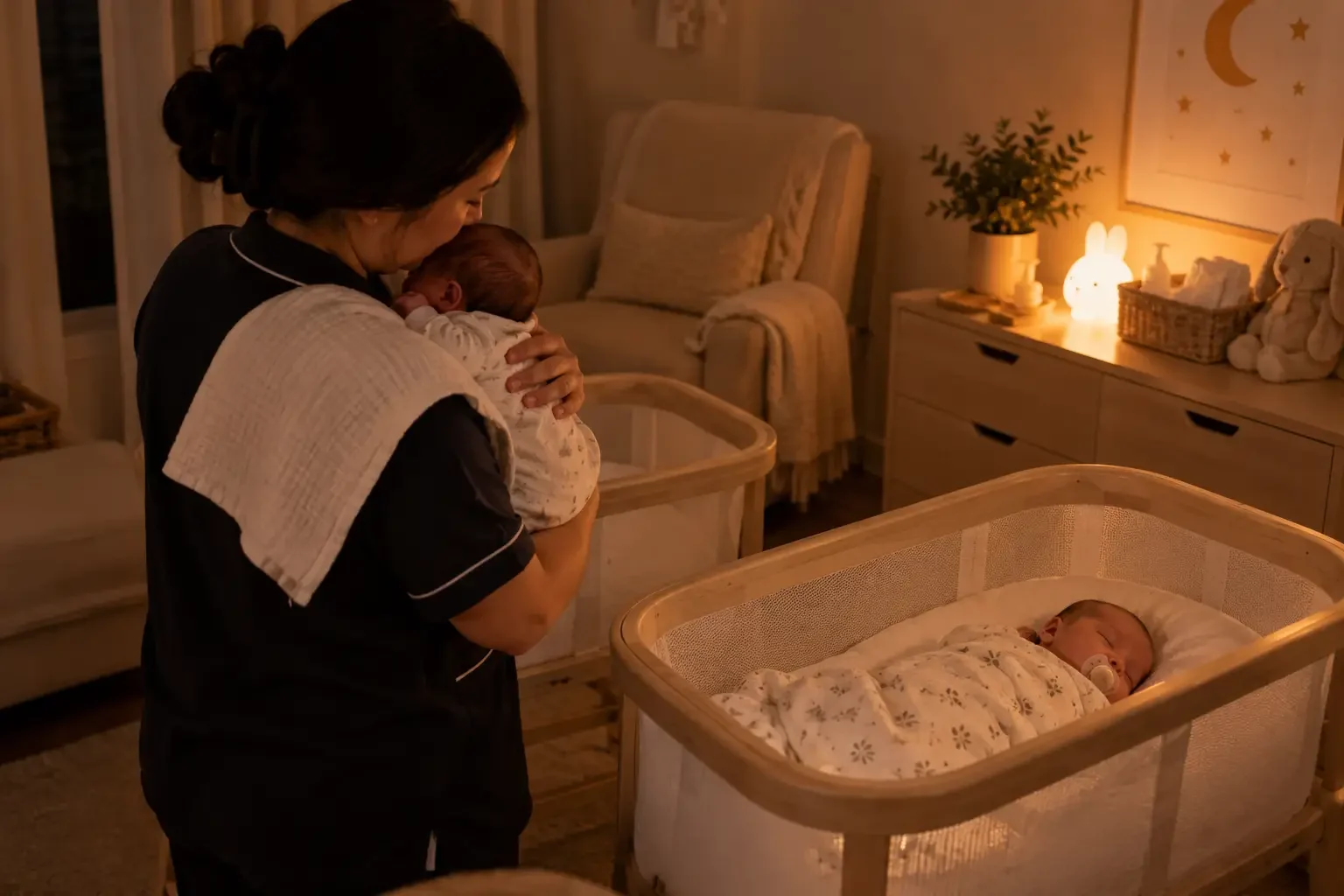
Numbers and lists only go so far, so picture one realistic night. Your overnight specialist arrives around nine, reads your notes, and checks the log from the evening. At eleven, one baby wakes hungry, so she feeds that baby, changes her, and settles her back in her own bassinet. Soon afterward, the second baby stirs, and she repeats the routine instead of waiting for you to wake.
If you nurse, she brings each baby to you, helps you latch if you want, and then handles the burping, diapering, and resettling while you drift back to sleep. By morning, you have slept in long blocks, and you wake to a written summary of every feed and diaper. That one change often turns the first weeks from survival into something you can enjoy.
Simple Routines That Make Twins Easier
Even with great help, a few routines keep the days steady. None of them needs special equipment.
First, track everything for the first few weeks. A simple log of feeds, diapers, and sleep for each baby takes the guesswork out of the day, and it helps your pediatrician if you have questions. Many caregivers keep this log for you.
Second, consider feeding the babies close together. When one baby wakes hungry, many families wake the other and feed both, so the babies settle into a shared rhythm. Some parents find this saves hours, though babies with different needs may not fit the pattern, and you should follow your pediatrician's advice on feeding.
Third, give each baby her own safe sleep space. The American Academy of Pediatrics recommends that babies sleep on their backs on a firm, flat surface, and it advises against bed sharing under any circumstances, including with twins. Even though it can look cozy, placing both babies in one bassinet or sleeping with them in your bed carries real risk, so use two separate sleep spaces and keep them bare, with only a fitted sheet. You can read more in our post on when babies sleep through the night.
Fourth, divide the nights. If you have a partner, split the night into two shifts so each of you gets one long block of sleep. Alternatively, bring in overnight help so both of you rest.
Fifth, say yes to meals and chores. When friends ask how they can help, give them a specific task, such as dropping off dinner on Tuesday, because specific requests get answered.
How Babymoon Concierge Supports Families of Multiples
At Babymoon Concierge, we have served Dallas-Fort Worth families since 2009, and our services include twins and multiples care alongside overnight newborn care, postpartum doula support, and NICU and preemie support. We pair parents of multiples with caregivers who have experience with more than one newborn at a time, and we plan the routines with you before the babies arrive. You can learn more about our twins and multiples care and our overnight newborn care for twins.
Pricing for multiples differs from single-baby care, because two babies need more hands. We build a custom quote around your needs, and our packages and pricing page shows how our programs work. If you want to dig into sleep for more than one baby, our earlier post on sleep training newborn twins and triplets pairs well with this one, and our newborn sleep page explains our sleep support. We also describe our staff honestly: they are experienced newborn care specialists and doulas, not registered nurses.
When to Start Planning
Twins often arrive early, so do not wait until the last weeks of pregnancy to arrange help. Many families begin looking during the second trimester, then confirm a plan by the early third trimester. Early planning also gives you time to meet your caregiver, share your feeding goals, and set up the nursery in a way that works for two.
Frequently Asked Questions About Postpartum Help for Twins
-
Most parents need overnight newborn care so they can sleep, plus daytime support for feeding, meals, and recovery. Emotional support matters too, because parents of multiples report high levels of stress.
-
The American Academy of Pediatrics advises against bed sharing, including with twins, and recommends that each baby sleep in her own firm, flat sleep space on her back. Ask your pediatrician if you have questions about your babies.
-
Yes. An experienced caregiver can feed, change, and settle two newborns in one shift, especially with a good log and a clear routine. Ask each caregiver about her experience with multiples.
-
Many families begin looking during the second trimester, because twins often arrive early and experienced caregivers book up.
-
Usually, yes, because two babies need more hands. Ask for a custom quote that reflects your situation.
-
If you feel persistently sad, anxious, or unable to enjoy your babies, tell your healthcare provider. You can also call or text 1-833-TLC-MAMA (1-833-852-6262) or 988 in a crisis.
Get Support Before the Babies Arrive
If you are expecting twins in Dallas-Fort Worth, Babymoon Concierge would love to help you plan. Visit https://www.babymoonconcierge.com/ to schedule a conversation about overnight care, daytime support, and a plan that fits your family.