
What Is a Sibling Doula? How Sibling Support Helps Your Whole Family After Birth
What Is a Sibling Doula? How Sibling Support Helps Your Whole Family After Birth
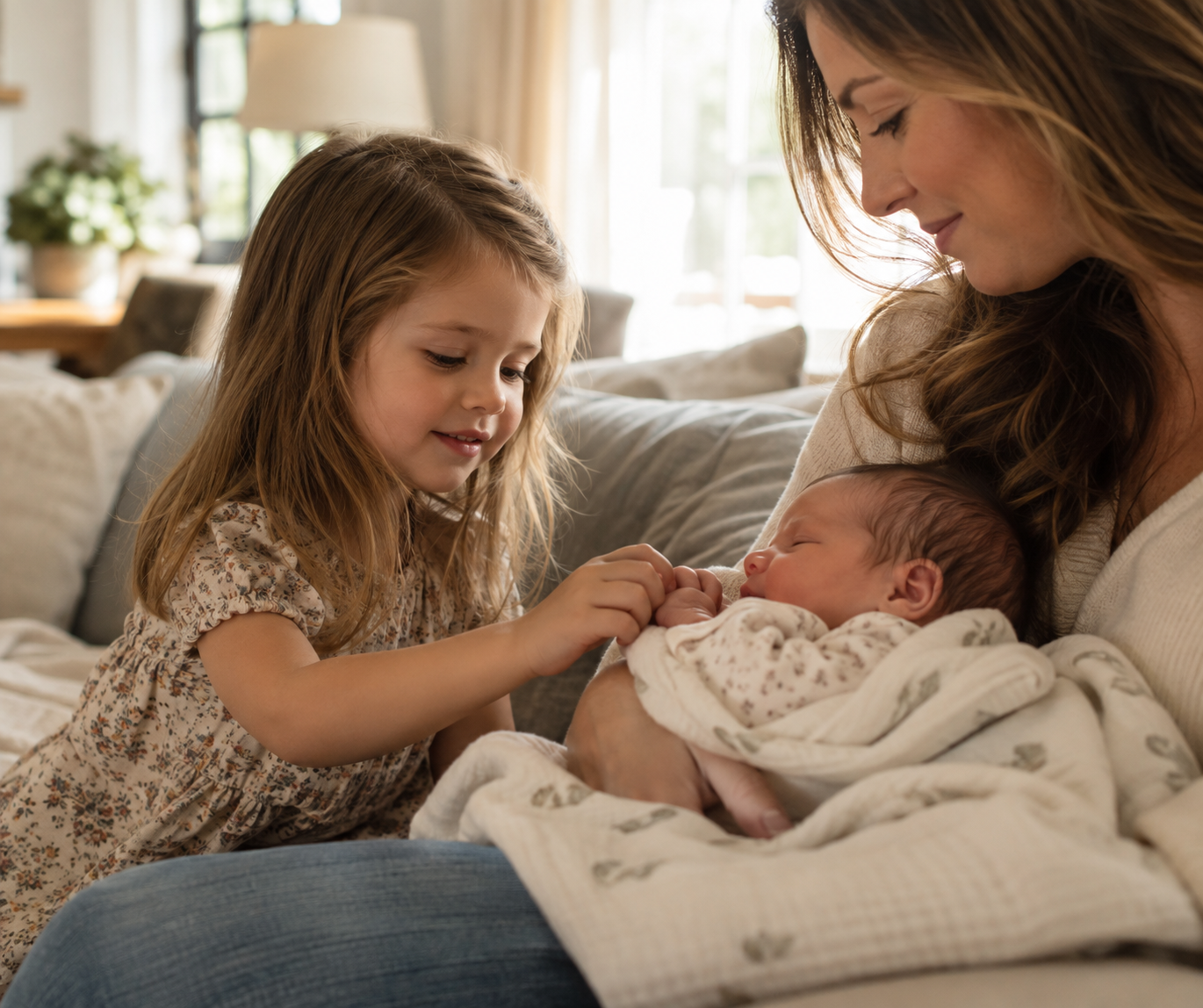
A new baby changes everything in a household, and often the person who feels that shift the hardest is not the parent. It is the older child standing in the doorway of the nursery, watching a stranger's worth of attention pour into a bundle of blankets that used to be theirs. Consequently, many families walk into the fourth trimester prepared for feedings and diaper changes but completely unprepared for a three-year-old who suddenly refuses to nap, hits the baby's bassinet, or asks to be a baby again. This is exactly where a sibling doula steps in, and it is a role more Dallas-Fort Worth families are asking about by name.
If you searched for this term because you already sense your older child is struggling, you are not overreacting. Sibling adjustment is a real, well-documented part of the postpartum period, and it deserves the same intentional support that feeding and sleep already receive. Below, we will walk through what a sibling doula actually does, why this kind of support matters so much in the first weeks after birth, and how it fits into the broader picture of postpartum care in Dallas-Fort Worth.
What Is a Sibling Doula?
A sibling doula is a trained support person who focuses specifically on helping an older child adjust to life with a new baby in the house. Unlike a general babysitter, a sibling doula understands child development, attachment, and the specific emotional territory a toddler or preschooler walks through when their world reorganizes itself around a newborn. She is not there to entertain a bored kid for a few hours. Instead, she is there to help your older child process a genuinely big transition while you and your partner focus on birth recovery and newborn care.
In practice, this support often overlaps with postpartum doula care, since most families cannot afford, or do not need, two entirely separate providers. Many postpartum doulas, including the team at Babymoon Concierge, build sibling support directly into their visits rather than treating it as a bolt-on service. That way, one trusted person can move fluidly between soothing the baby and getting down on the floor to build blocks with your four-year-old.
Why Sibling Adjustment Matters After a New Baby Arrives
Sibling adjustment is not a minor parenting inconvenience. Research on early childhood consistently shows that the arrival of a new sibling is one of the most significant relational disruptions a young child experiences, right up there with starting school or moving to a new home. Because a toddler's entire sense of security is built around consistent access to a caregiver, watching that caregiver's attention redirect toward a newborn can feel, from a two-year-old's perspective, like the ground shifting beneath them.
This is why regression is so common in the weeks after a new baby comes home. A child who was fully potty trained may start having accidents again. A confident sleeper may suddenly refuse their crib or bed. A previously easygoing toddler may become clingy, defiant, or prone to sudden meltdowns over things that never used to matter. None of this means you are doing anything wrong as a parent. It simply means your older child is doing exactly what developmentally appropriate coping looks like at their age.
Common signs your child is struggling with the transition include:
Increased tantrums or aggression, particularly directed at the baby or a parent
Regression in sleep, potty training, or speech
New clinginess or separation anxiety, especially around the parent who was previously the baby's primary caregiver
Asking to be fed from a bottle, carried, or treated "like a baby" again
Withdrawal, sadness, or a noticeable drop in energy and enthusiasm
If you are noticing two or three of these signs at once, that is a strong signal your family could benefit from dedicated sibling support rather than trying to manage it solo in the middle of your own recovery.
What Sibling Doula Support Actually Includes
So what does this look like day to day? A sibling doula's work generally falls into three phases, and each one addresses a different part of the transition.
Before the baby arrives, a sibling doula helps prepare your older child for what is coming. This might include reading books about becoming a big sibling, talking through what a newborn can and cannot do, and gently setting expectations that a new baby cries, sleeps a lot, and cannot play right away. Preparation like this does not eliminate the adjustment period, but it does soften it considerably.
During the fourth trimester, once the baby is home, a sibling doula shifts into active, hands-on support. She might take your older child to the park while you nurse, sit with them during a feeding so they do not feel excluded, or simply give them focused, undivided attention for an hour so they get a concrete answer to the question every sibling silently asks: do I still matter as much as I did before? Meanwhile, she watches for regression, validates big feelings without dismissing them, and models calm, patient language you can borrow for the moments she is not there.
As the weeks pass and your family settles into a new rhythm, sibling support typically tapers rather than stopping abruptly. A skilled doula helps your older child build a genuine relationship with the baby, framing them as a teammate rather than a competitor, so that by the time formal visits wind down, sibling rivalry has a much smaller foothold than it otherwise might.
Sibling Doula Support Versus General Postpartum Doula Care
It is worth being clear about how this differs from standard postpartum doula work, since the terms sometimes get used loosely. A postpartum doula's core focus is the birthing parent and the newborn: recovery, feeding support, newborn care education, and household relief. Sibling doula support, on the other hand, is specifically aimed at the other child or children already in the home.
In practice, these two roles are complementary rather than competing. A postpartum doula who also understands sibling adjustment can weave both kinds of support into the same visit, for example handling a feeding while an assistant or second team member engages the older child, or timing visits so the doula can give focused sibling attention during the exact window when a newborn is napping. Families who want dedicated, structured sibling support alongside standard postpartum care should ask directly whether their provider offers this, since not every agency builds it into their model.
How Babymoon Concierge Supports Siblings in Dallas-Fort Worth

At Babymoon Concierge, our team treats sibling support as part of whole-family postpartum care rather than an afterthought. Our postpartum doulas and newborn care specialists are trained to read the room for the entire household, not just the newest member of it. During in-home visits, that means noticing when an older child needs a lap to sit on just as much as a parent needs a break, and building age-appropriate connection time into the visit alongside newborn care and feeding support.
For families in Southlake, Frisco, Highland Park, and across the greater Dallas-Fort Worth metroplex, this whole-family approach often makes the difference between a rocky fourth trimester and one where the older sibling genuinely bonds with the new baby early on. Because our team has supported DFW families since 2009, we have seen firsthand how much smoother the adjustment goes when sibling needs are planned for in advance rather than addressed reactively once tantrums are already in full swing.
If you already know your older child struggles with change, or if this is your family's first experience adding a second or third child, it is worth raising sibling support directly during your intake conversation. As a result, your care plan can be built around your whole family from day one, not just the newest arrival.
Signs Your Family Could Benefit from Sibling Doula Support
Not every family needs formal sibling support, and that is completely fine. However, a few situations make it especially worth considering. If your older child has a history of anxiety or struggles with transitions generally, dedicated sibling support tends to pay off quickly. Similarly, if you are managing a difficult physical recovery, whether from a cesarean birth or a complicated delivery, you may simply not have the bandwidth to give an older child the attention they need while also healing.
Families without nearby relatives who can step in for sibling care, or those whose support network fades after the first week or two, also tend to benefit significantly. Finally, if you are already noticing regression, aggression toward the baby, or persistent clinginess, that is a clear sign the adjustment is harder than your child can manage alone, and outside support can help before the dynamic hardens into a longer-term rivalry.
Frequently Asked Questions About Sibling Doula Support
-
A babysitter provides general supervision and entertainment. A sibling doula brings specific training in child development and the emotional transition of becoming a big sibling, so she focuses on helping your older child process the change instead of just keeping them occupied.
-
Sibling support tends to be most valuable for children between roughly eighteen months and six years old, since this is the age range where object permanence, language, and self-regulation are still developing, which makes big transitions especially hard to process independently.
-
Yes. Preparing an older child before the birth, through books, honest conversation, and gently adjusted expectations, is one of the most effective ways to reduce how hard the adjustment hits once the baby actually arrives home.
-
Most families see noticeable improvement within four to eight weeks as routines stabilize, though every child adjusts at their own pace. Consistent, patient support during this window tends to shorten the adjustment period considerably compared to no intervention at all.
Every family's fourth trimester looks a little different, but no family should have to choose between caring for a newborn and caring for the older sibling who is quietly struggling in the background. If your household is adding a new baby and you want a plan that genuinely covers everyone under your roof, Babymoon Concierge is ready to help. Reach out to Babymoon Concierge at https://www.babymoonconcierge.com/ to talk through what sibling support could look like for your family in Dallas-Fort Worth.
-
Many families use one provider for both. At Babymoon Concierge, sibling support is built into our postpartum doula visits rather than requiring a separate service, so you are not coordinating multiple providers during an already demanding season.