
There’s A New Shift in Breastfeeding: How LACEVO Compares With Willow and Spectra
Do you know what? Breast pumps have come a long way from the noisy, uncomfortable machines that required mothers to sit beside an electrical outlet. And even the prices have come down compared to Forty years ago when I was a new mother. Today’s pumps are smaller, smarter, more comfortable, and designed to fit into real life. For busy mothers, working professionals, and families adjusting to the demands of a newborn, this innovation is more than a luxury. It can make a meaningful difference in whether pumping feels manageable.
On August 16th of this year, I had the pleasure of attending a beautiful luncheon hosted by LACEVO, where I was introduced to the company’s approach to breast pumping and postpartum breast care. As a breastfeeding educator, postpartum doula, and newborn care specialist, I am always interested in products that may make the early weeks easier for brand new mothers. What stood out to me was LACEVO’s focus on the mother’s comfort—not simply milk collection. That’s a big plus in my opinion.
But how does LACEVO compare with two recognizable choices like, Willow and Spectra? Each one serves a different kind of pumping parent, and the best option depends on lifestyle, milk-supply needs and comfort.
LACEVO S70: Wearable Pumping With More Attention to Fit
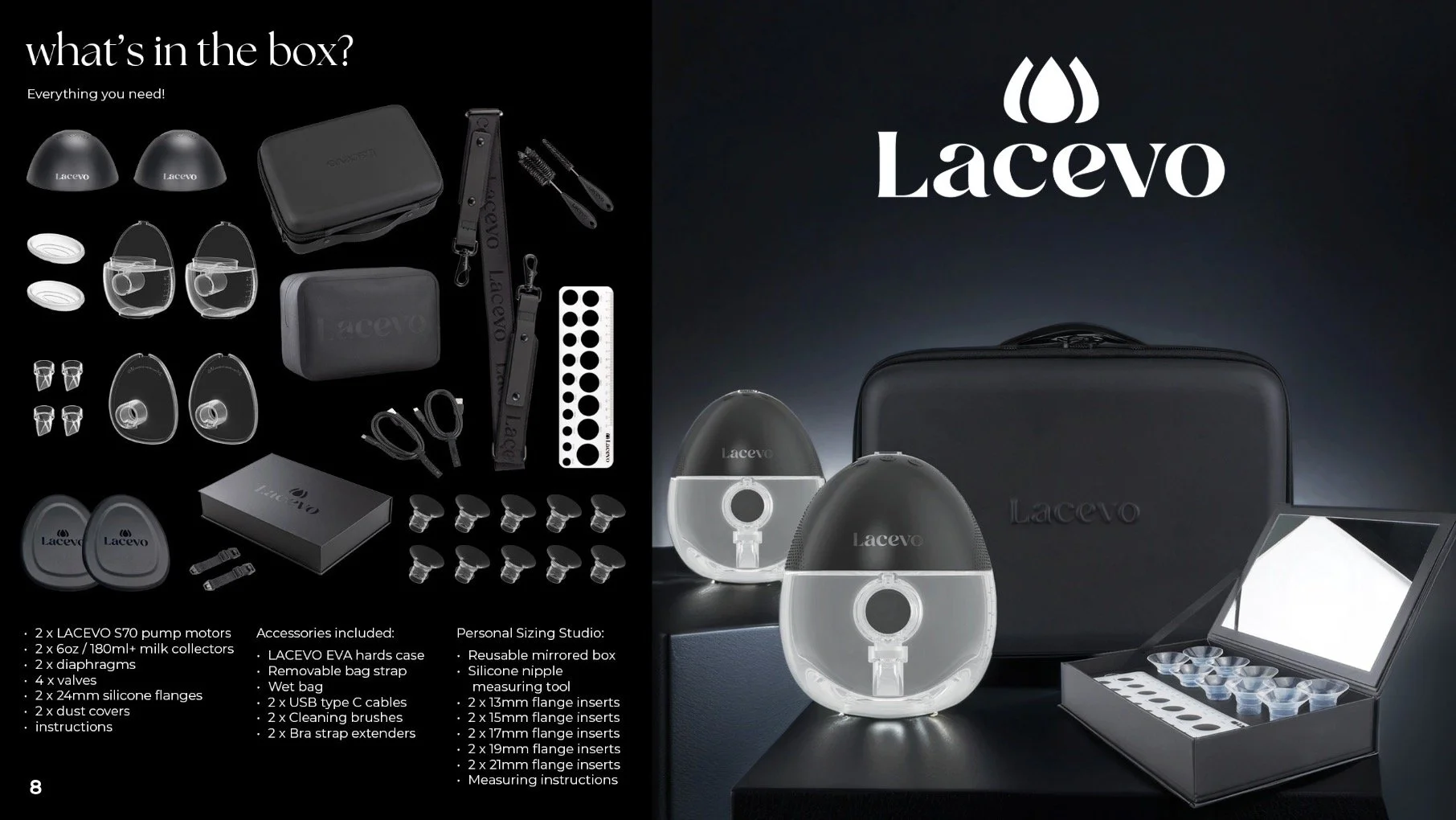
The LACEVO S70 is a hands-free pump worn inside the bra. According to LACEVO, it offers four pumping modes, 12 suction levels, suction up to 290 mmHg, and a six-ounce collection capacity per pump. It can be operated from its display or through an app, which also records pumping history.
Its most interesting feature may be the sizing system. The set includes a measuring tool, mirror, 24 mm silicone flange, and inserts in 13, 15, 17, 19, and 21 mm sizes. Proper flange fit matters because an incorrect size can contribute to rubbing, discomfort, nipple swelling, and inefficient milk removal. LACEVO also designed a longer flange tunnel to accommodate a wider range of nipple types, including elastic nipples.
The S70 includes fill-sensor alerts, self-standing collectors, carrying accessories, and two pumps. At approximately 0.58 pounds per pump, it is intended for mothers who want to move around or handle light tasks while pumping.
LACEVO also introduced EMPOWER, a separate red and near-infrared light breast-care system. It is marketed for breast comfort and recovery; it does not express milk and should not be confused with the S70 pump. Because breast pain, swelling, redness, fever, or a suspected clogged duct can sometimes require professional assessment, mothers should discuss persistent symptoms—and the use of light-based devices—with their healthcare or lactation provider.
Willow Go: An Established Wearable for Everyday Mobility
The Willow Go is another fully in-bra, cord-free pump. It is app-connected and designed for parents who need to pump while working at a desk, commuting, or completing everyday tasks. Willow includes 21 mm and 24 mm flanges with the pump and offers additional sizing options.
Willow states that the Go provides hospital-grade suction and 45 degrees of leak-resistant mobility. That distinction is important: it is wearable, but it is not designed for unlimited bending or lying down. Mothers needing greater movement may want to compare it with the Willow 360, which uses a different collection system.
The Willow Go is a strong candidate for a working mother who values discretion, mobility, app control, and an established wearable platform. Like most wearable pumps, however, success still depends on alignment, flange fit, charging, correct assembly, and regular cleaning. Some mothers also find that a wearable works best as a convenient secondary pump rather than their only pump—especially while establishing supply.
Spectra S1 Plus: A Traditional Workhorse With Rechargeable Power
The Spectra S1 Plus is not worn inside the bra. It is a rechargeable double-electric pump with tubing, external flanges, and bottles. That makes it less discreet than LACEVO or Willow, but its traditional setup offers visibility and control that many exclusive pumpers and frequent pumpers value.
Spectra lists suction up to 270 mmHg, adjustable massage and expression settings, single- or double-pumping capability, a timer, night-light, and a closed system designed to prevent milk from backing into the tubing or motor. It weighs about three pounds and includes 24 mm and 28 mm flanges.
The S1 Plus may be the better fit for a mother who plans to pump frequently at home or work and prioritizes a proven, full-size setup over in-bra convenience. Its rechargeable battery makes it portable around the home, although it is not as hands-free as a wearable unless paired with a pumping bra.
Quick Comparison
-
Best Suited For
Mothers wanting wearable convenience and more included sizing choices
Stand Out Feathers
Six flange-size options, four modes, 12 suction levels, fill alerts, app and pump controls
Considerations
Newer brand in the U.S.; EMPOWER is a separate breast-care device
-
Best Suited For
Working or multitasking mothers wanting an established in-bra system
Standard Features
Cord-free design, app control, reusable containers, wearable mobility
Considerations
Must remain within its recommended range of movement; fit and alignment still matter
-
Best Suited For
Frequent or primary pumping at home or work
Standout Features
Rechargeable battery, closed system, adjustable settings, timer and night-light
Considerations
External tubing and bottles make it less discreet and less mobile
So, Which Breast Pump Is Best For You?
There is no single best pump for every mother. The LACEVO S70 may appeal most to someone who wants wearable freedom and a wider range of included flange inserts. Willow Go may suit a mother who wants a familiar, app-connected wearable for daily multitasking. Spectra S1 Plus may be preferable for someone seeking a rechargeable traditional pump for frequent, structured sessions.
But, before purchasing any pump, consider how often you expect to pump, whether the pump will be your primary or backup option, where you will use it, how much movement you need, and whether replacement parts are easy to obtain. Insurance coverage and HSA or FSA eligibility may also affect the final decision as well.
And,most importantly, a pump should never be painful. Stronger suction does not automatically create more milk, and an expensive pump cannot correct a poor flange fit or an ineffective pumping schedule. A lactation professional can help with sizing, milk transfer, supply concerns, and a plan based on the mother and baby—not simply the machine.
The Real Innovation Is Supporting the Mother
What I appreciated most about the LACEVO luncheon was the attention given to the complete breastfeeding experience. Pumping is not merely a mechanical task. It happens while a mother is healing, learning her baby, losing sleep, managing a household, and often preparing to return to work.
The newest generation of breast pumps reflects an important change: companies are beginning to design around the mother’s comfort, time, body, and daily life. Whether a family chooses LACEVO, Willow, Spectra, or another trusted pump, the right choice is the one that supports safe, comfortable, and sustainable feeding goals.
Babymoon Concierge provides breastfeeding education, postpartum doula support, and newborn care throughout Dallas–Fort Worth. If you would like personalized guidance as you prepare for your baby or adjust to life at home, contact us at cheryl@babymoonconcierge.com.
Disclosure: I attended a luncheon hosted by LACEVO and received an introduction to its products. This article is educational and compares manufacturer-published features; it is not medical advice or a paid ranking. Product features may change. Consult your healthcare provider or an IBCLC for pain, breast symptoms, milk-supply concerns, or individualized feeding guidance.